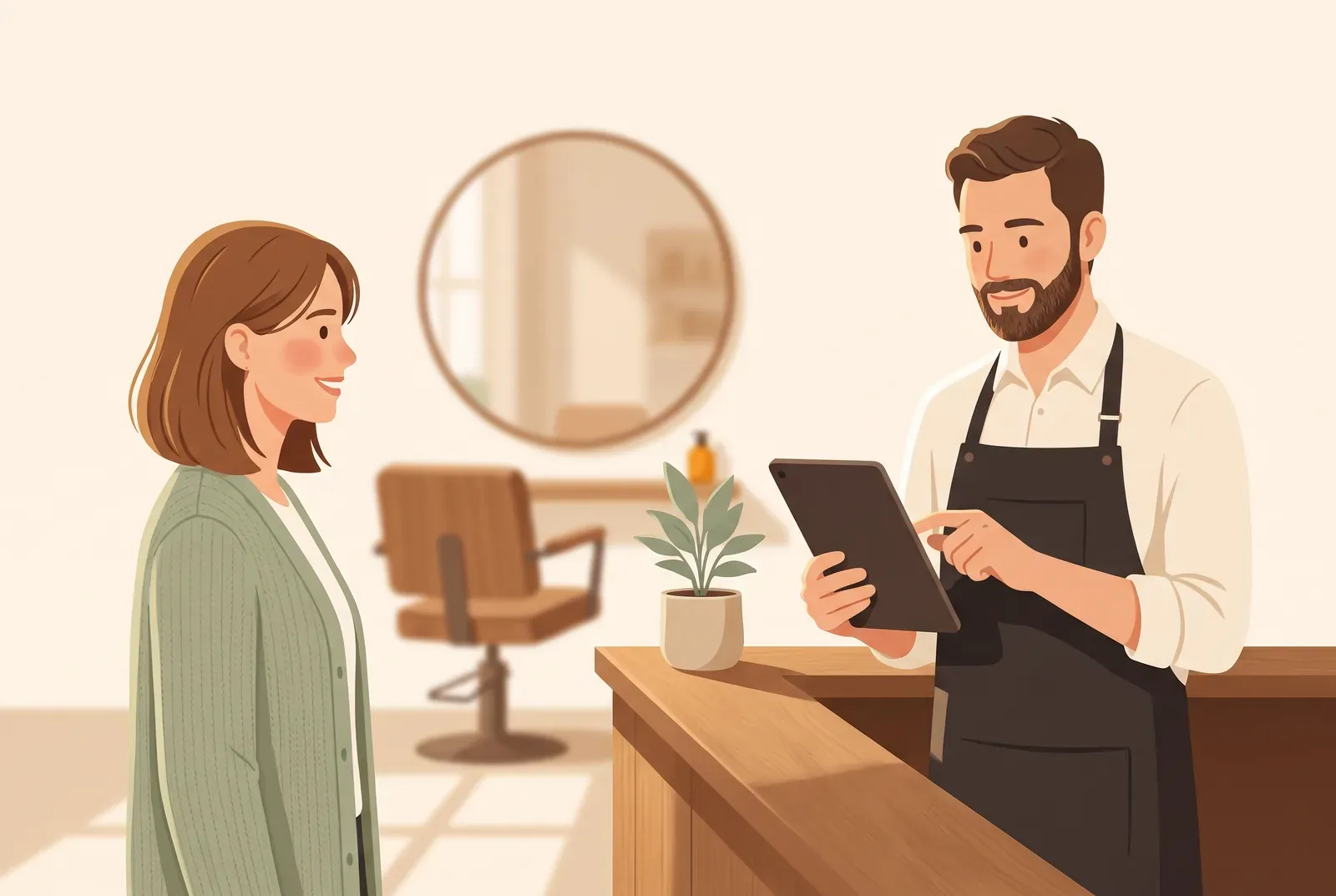
A good cut isn’t enough. The real question at a salon isn’t whether your client leaves happy today. It’s whether they’re back in your chair in six weeks, or in whoever’s chair happens to have an opening. Loyalty at a salon is an appointment business: it works differently from walk-in trade, and it rewards consistency. Here are six ideas that need no budget, just a bit of routine at the front desk.
Why regulars matter more than anything else at a salon
Weeks pass between visits, not days, which makes every single visit valuable, and a good client sticks around for years if you get it right. That makes the maths simple: losing one regular outweighs ten one-time visitors, and winning a new client costs a multiple of what it costs to keep one you already have. That’s exactly why it pays to organize the return visit actively instead of just hoping for it.
1. Book the next appointment before your client leaves
This is the strongest lever you have, and the one most often left on the table. Anyone who leaves the salon without a follow-up appointment decides all over again in six weeks whether, and where, to go. Anyone who already has a slot in the calendar shows up. Make rebooking a fixed part of saying goodbye: “Same time again in six weeks? Let me pencil you in right now.” It’s not a sale, it’s an offer. A confirmed appointment is the best loyalty tool there is; it’s already in the calendar before any card even enters the picture.
2. Reach out at the right moment, not too early, not too late
Not everyone books on the spot. For everyone else, timing is what decides whether a reminder lands. Too early feels pushy; too late, and your client has already been somewhere else. Go by the actual rhythm: a men’s cut starts looking rough after four to five weeks, a colour needs a refresh after six to eight. Knowing that gap means you can reach out exactly when the need arises, with a short, personal message instead of a mass email. And the best way to fill the quiet weeks in your calendar is by reaching out specifically to clients whose last visit was a while back.
3. Small rituals turn the appointment into an experience
People talk about rituals, not prices. The coffee made just how they like it, without asking. The two minutes of scalp massage during the wash. The quick “how was that trip you mentioned last time?” None of it shows up on the receipt, and that’s exactly the point: these details are why someone puts up with ten extra minutes on the drive to you instead of walking into the salon around the corner. A salon visit is more than a service to begin with, so use that.
4. Keep a client file worth the name
The line “same colour as always?” builds more loyalty than any discount. You don’t need expensive software for that, just the habit of writing down what matters: colour formula, preferred length, allergies, the kid’s name, the last conversation about their fringe. When your team changes or someone’s out sick, that file saves the experience. The client doesn’t notice that someone else is cutting today, because the knowledge lives in the salon, not just in one person’s head. Personal attention isn’t a nice extra at a salon, it’s the product.
5. Make referrals easy
Your happiest clients are your best advertising, but only if you make it easy for them. A simple “bring a friend, you both get something” works better at a salon than almost anywhere else, because haircuts get seen and people get asked where they had it done. Keep the incentive concrete and fair for both sides, the one who refers and the new client. The only thing that matters is that your team actually brings it up, instead of waiting for it to happen on its own.
6. A stamp card with a realistic target (5–6 stamps)
A stamp card bundles all of this into visible progress, as long as the target fits the salon’s rhythm. And this is where most people make the same mistake: they copy the ten stamps from the café down the street. At one visit every six weeks, a ten-stamp card wouldn’t fill up for over a year, and that motivates nobody. Work backwards instead: five to six stamps with a reward that’s actually worth something (“50% off your 6th cut” or “your 6th treatment with a free hair mask thrown in”) are reachable within a year and reward genuine loyalty. It’s well documented, by the way, that people come back faster and more often the closer they get to a reward. A café field study by Kivetz, Urminsky and Zheng (2006) measured exactly this effect.
To keep the card from ending up in the other jacket again, the digital version pays off: with Treubar, the loyalty card lives in Apple Wallet or Google Wallet, can’t get lost, and gets stamped with a QR scan at checkout, and your clients don’t have to install anything for it. It also shows you in the dashboard how many of your guests keep coming back, and a push message to all cardholders fills the quiet weeks. For the full story on why the card mechanics work differently at a salon than at a café, see A digital loyalty card for your hair salon.
Frequently asked questions
How many stamps make sense for a hair salon?
Five to six. The reason is the long gap between visits: with an appointment every six to eight weeks, a ten-stamp card wouldn’t fill up for over a year, and that demotivates more than it builds loyalty. Always work the target backwards from your clients’ actual rhythm, so the reward stays reachable in months, not years. The fundamentals are in our loyalty program guide for small businesses.
Does a stamp card replace my client file?
No, the two solve different problems. The file records who your client is (colour, preferences, history), so your attention stays personal. The stamp card gives them a visible reason to book the next appointment with you instead of somewhere else. They work best together: personal attention plus a tangible goal.
How do I win back clients who haven’t been in for a while?
Best with a concrete reason at the right moment: a colour refresh once it’s been about eight weeks since the last visit, or a small extra for the next appointment. What matters is that the message feels personal, not like promotional spam. A digital card makes this easier: it already sits on the lock screen and quietly reminds them of you, and a push message to all cardholders lands your reason right on their phone, no app to open.
What does it cost to get started?
Trying it out is free: the Free plan covers one card, one location, and up to 20 active wallet passes, enough to test the idea with real clients. If your program grows, Pro is €39 a month with analytics and targeted push messages. Details on the pricing page.