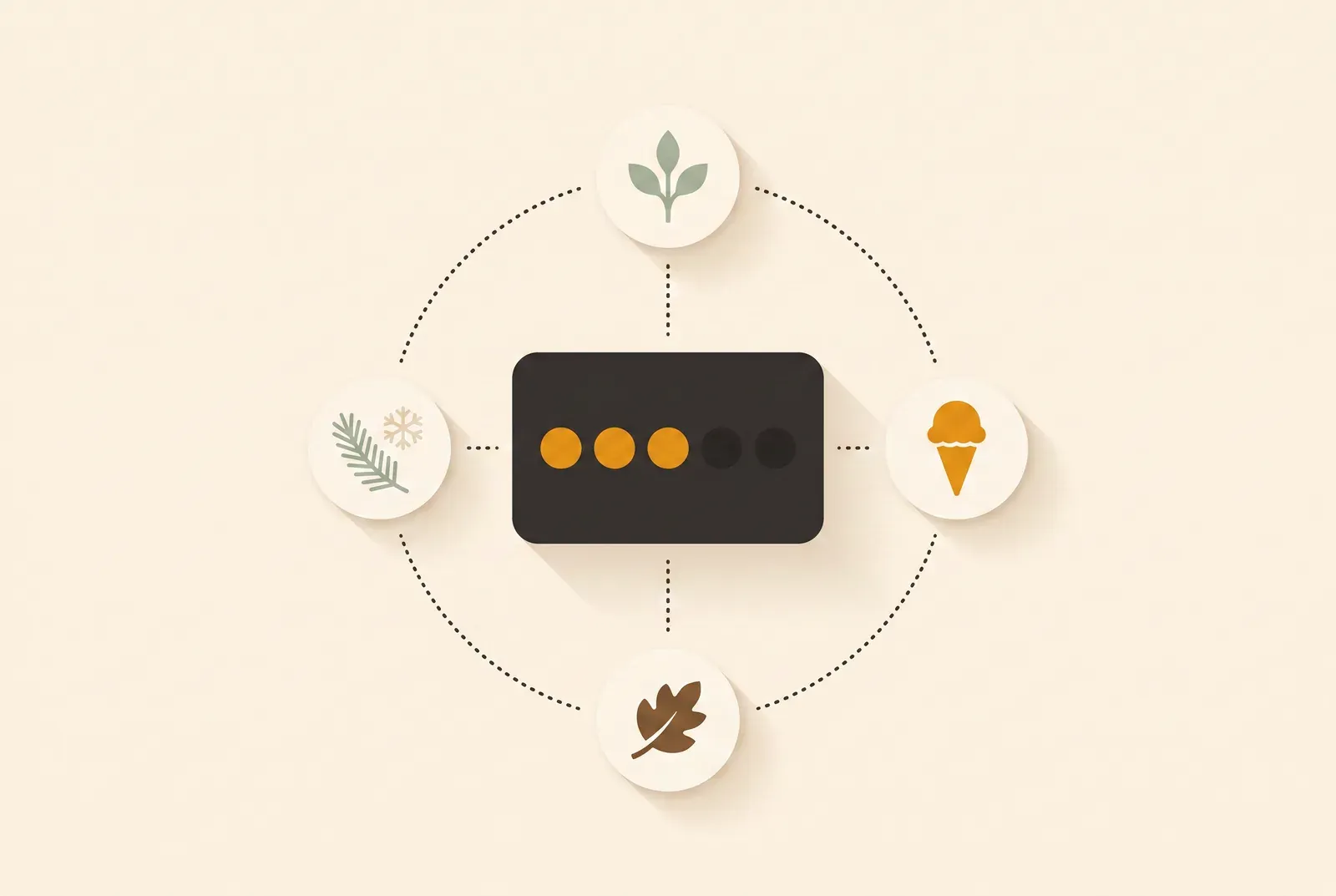
A small shop’s year comes in waves: weeks when the door never stops swinging, and weeks when you’re grateful for every single guest. A stamp card keeps running quietly in the background. But it can do a lot more once you think of it alongside the calendar. A double stamp on the right week, a short message before a long weekend, a fresh card design for the cold season, all of them small levers that pull exactly when you need them. Here’s a route through the year, occasion by occasion.
Three mechanics you’ll use again and again
Before we get into it, three tools. Every campaign below is just a new combination of them.
- Double stamps: on a chosen day, every visit counts twice. Since your team already stamps by scanning, this costs no extra effort. Tap twice instead of once, done. It’s a strong reason to come in today of all days. One thing to watch: if you use the optional minimum gap between two stamps in the app, switch it off for the campaign day, or the second stamp won’t count.
- A seasonal card design: for a few weeks, your stamp card takes on a different look and a different goal (“Summer Bowl,” “Winter Warm Drinks”). In Treubar, all 67 templates and the full custom design are part of every plan, the free one included. So you restyle the card for the season and change it back afterwards, with nothing new for your guests to set up.
- The push message: a short note that lands straight on the lock screen of every cardholder, with no extra permission needed from guests. Perfect for announcing a campaign. For more on wording these messages without becoming annoying, see push campaign ideas for local shops.
Spring: kicking off ice cream season
For many shops, the first warm day is the real start of the year. That goes double for the ice cream shop. Use the moment when people are already craving the outdoors again to get cards into circulation.
The mechanic: a double-stamp weekend to open the season. Anyone who sets up a card now gets two stamps right away and is already mid-collection, so the first goal feels reachable immediately.
Sample message (push or sign): “Season’s open! This weekend, every scoop earns a double stamp. Don’t have a card yet? One scan at the counter.”
For families, a low stamp goal pays off. With an impulse product like ice cream, a free fifth scoop is more realistically within reach than a tenth coffee. And kids count their own stamps.
Summer: bridging the slow patch
Midsummer often tips the other way: heat, holidays, your regulars out of town. Instead of waiting it out, give the ones who stayed a reason to come in.
The mechanic: put double stamps specifically on the slow hours, the hot afternoons when almost nobody comes in. Add a push to everyone who hasn’t been by in a while.
Sample message: “Too hot to do much? From 2 to 5 pm, everything cold earns a double stamp. Stop by, cool off, fill up your card.”
Don’t overdo the messages. One well-placed push per campaign is enough. Send too many and the card gets deleted from the wallet, and then you’ve lost the exact channel you were trying to nurture.
Fall and winter: the warm-drinks card
Once it gets dark early, demand shifts toward hot drinks, soups, anything that warms from the inside. That’s the moment to give your card a winter face.
The mechanic: for the cold season, you switch your card to a matching look and a matching reward (“every 8th mulled wine on the house,” “10th hot chocolate free”). It stays the same card your guests already have in their wallet. This channels fall-and-winter demand toward one clear goal, without rebuilding your core program.
Sample message: “It’s getting cold, time for the winter card. Starting today, every warm drink earns a stamp. The tenth one’s on the house.”
Once the season’s over, you simply switch it back. Because it stays the same card, nobody has to set up a new one, and your core program carries on as before.
Holiday season: say thank you, not just sell
Late November through Christmas is already busy enough. Your campaign here doesn’t need to drive more visits. It needs to show appreciation, and keep guests with you through the stressful weeks.
The mechanic: an Advent weekend with double stamps as a small thank-you, plus a push shortly before the holidays with your opening hours. The practical bonus is that the message also reminds guests the card exists.
Sample message: “Thanks for being with us all year. On the third Sunday of Advent, we’ve got double stamps, and here are our hours over the holidays: [hours]. Happy holiday season!”
A full card right before Christmas is a natural occasion to redeem the reward and leave a good last impression before the break.
January: fighting the slump
For many, January is the toughest month. After the holidays, everyone pulls back. A deliberate fresh-start push helps here.
The mechanic: a new-year push that looks forward, paired with a launch offer. Say, one free starter stamp for anyone who sets up a new card in January. It’s a head start that costs nothing and still works, because people are more likely to stick with it when the card doesn’t start at zero.
Sample message: “New year, new card. In January, everyone starts with one stamp already on it. Come by and you’re already on your way.”
This kind of head start is well documented. In a café field study by Kivetz, Urminsky, and Zheng (2006), guests filled their cards faster when they felt they’d already covered some of the distance, even though the remaining effort was exactly the same.
Local events: join in when the town celebrates
Street festival, farmers’ market, a Sunday with shops open, the home game down the road. On days like these, more people are out and about than usual, and many of them are in your shop for the first time. Turning that walk-in traffic into cardholders is the best use of days like these.
The mechanic: double stamps on the day of the event, so setting up a card pays off right away. And one line your team always says: “Are you collecting with us yet? One scan and the card’s on your phone.” No lecture, just an offer while they wait.
Sample message: “Street festival weekend! Saturday and Sunday, every stamp counts double. New here? You’ll start collecting twice as fast.”
That’s how a one-time visitor might become a guest who also comes back on a gray Tuesday in February. And that’s exactly what the whole year is about.
Frequently asked questions
How often a year should I run a campaign?
Fewer than you’d think. Four to six clearly placed occasions over the year work better than a permanent promotion nobody notices anymore. A double stamp only stays special as long as it stays the exception. Tie your campaigns to real moments like the season kickoff, the summer lull, Advent, January, instead of scattering them at random.
Does a double stamp dilute my reward?
Only if you give it out constantly. On single days, it’s a cheap incentive. You hand out a few stamps earlier and gain visits on days that would otherwise be quiet. Do a rough count of how many extra stamps a campaign costs, and whether the reason to come in at all is worth it. Usually, it is.
Do I need a paid plan for a seasonal campaign?
No. Every campaign in this article runs on your one stamp card, and that comes with the free plan already, all 67 templates and the full custom design included. The double stamp, your most important tool, works the same way: your team simply scans twice. A paid plan only starts to pay off once you want to announce your campaigns, since push campaigns come with Pro. So start small, test a first campaign with your existing card, and only upgrade once you find the seasonal approach is paying off. For how to set up a program properly in the first place, see our loyalty program guide for small businesses.